

Latin America

/Tag: Latin America


25 04, 2025

Showcasing Indigenous Water Rights Activists

2026-03-29T17:57:45-04:00Tags: , , , |

Fiona McLeod, a freelance writer reporting on environmental justice issues, highlights the film “Water For Life” which tells the story of three Indigenous activists in Central and South America as they face threats to their lives in the fight to protect their communities’ access to clean water and ancestral lands from mining, hydroelectric projects, and large-scale agriculture plans. The three activists have all previously received the Goldman Environmental Prize, and include the now deceased Berta Cáceres, a leader of the Lenca people who successfully stopped construction of a hydroelectric project in Honduras; Francisco Pineda, a subsistence agriculture farmer who led a movement that stopped a gold mine in El Salvador; and Alberto Curamil, an Indigenous Mapuche leader in Chile who organized to stop two hydroelectric projects on the sacred Cautín River. The podcast invited the filmmakers to discuss the narratives and stories shared during the film, specifically the human costs, sacrifices, and loss of environmental defenders in Latin America. In the story of Berta Cáceres, they share how she mobilized her community to resist the construction of the Agua Zarca Dam on the sacred Gualcarque River by the Honduran corporation DESA. The river is considered sacred and to be a place where female spirits live, and the dam was planned to be built in the heart of the river. As Berta put forth, the Lenca consider the river and Mother Earth to have rights, sentiments spoken long before the Rights of Nature movement had been used as a legal precedent. Less than a year after earning the Prize, Berta was assassinated in her home. Her death inspired activists around the world to support the Lenca’s fight to protect their ancestral land. Her three daughters, Olivia, Berta, and Laura Cáceres, carry on her work, continuing to raise international awareness of Berta’s work.

28 11, 2024

Women Crossing the Line: Defensoras in Mexico, Honduras, and Guatemala

2026-03-26T00:50:17-04:00Tags: |

“Women Crossing the Line: Defensoras in Mexico, Honduras, and Guatemala,” is a three part mini-documentary series that spotlights the work of women defenders in each of the three countries. The filmmakers meet women activists from Latin America who have stood bravely to demand an end to violence and promote women’s rights. The films highlight Alma Gomez, a former guerilla fighter now working to seek justice for victims of femicide in northern Mexico; Daysi Flores, who took to the streets in defense of democracy after the 2009 coup in Honduras; and Nobel Laureate Rigoberta Menchú Tum, who works to defend the rights of Indigenous communities in Guatemala. The episodes document how women human rights defenders combat femicide, seek justice for victims of sexual violence, promote human rights in communities, navigate setbacks in militarized landscapes, and defend their land and livelihoods against violence and extractives.

31 05, 2022

A look at violence and conflict over Indigenous lands in nine Latin American countries

2023-11-30T14:33:37-05:00Tags: |

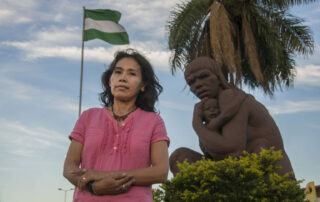
This article interviews twelve Indigenous leaders from nine Latin American countries to discuss the violence and conflict experienced in the region due to land disputes. One leader interviewed, Ruth Alipaz (leader of the San José de Uchupiamonas community of Bolivia), has been pushing against the Chepete-El Bala hydro project. The proposed project would create two reservoirs which would flood around 66,000 hectares of territory, and displace 5,000 or more people, the majority being Indigenous. Ruth shares how she has received threats for her vocal opposition to the project, emphasizing this common shared experience between female Indigenous leaders. About 363 Indigenous activists in Latin America were murdered between 2012 and 2020. Marina Comandulli, who is a campaign officer for Global Witness, shares how Indigenous People make up one third of the global number of murdered environmental activists despite comprising only 4% of the global population. In the face of violence and discrimination from male peers, Indigenous women continue to lead the forefront of land protection, creating organizations like Amazonian Women, a group made up of over one hundred Ecuadorian women who work on land protection and cultural preservation.  Photo Credit: Flor Ruíz

29 03, 2021

Finally, UN Recognizes We Need Indigenous Peoples to Save Forests

2025-07-10T09:18:51-04:00Tags: , |

The Food and Agricultural Organization of the United Nations released a report stating that Indigenous and tribal communities in Latin America and the Caribbean, the primary protectors of the forests and biodiversity in the region, need more protections and resources that have consistently been denied or taken from them. Ginny Alba and Robinson López Descanse are a married Colombian couple who have dedicated their lives to climate activism. After López Descanse died of COVID-19, leaders became more aware of the need for better health, education, and financial resources for Indigenous and tribal groups. Providing Afro-Latin and Indigenous peoples in Latin America and the Caribbean with land rights and economic support protects communities, cultures, livelihoods, while protecting biodiversity, reducing carbon emissions, and creating a more liveable environment Earth. Indigenous sovereignty is a climate solution.

7 06, 2017

Women’s right to the city; reflections on inclusive urban planning

2025-05-24T18:58:13-04:00Tags: , |

Ana Falú is an Argentinian architect, professor, researcher, and feminist activist whose work focuses on the shortcomings of traditional city design and planning, recognizing the unequal relations between men and women, and the opportunities to do better. Women's rights to the city have historically been overlooked, despite their active participation in city building and social movements. In Latin America, these challenges are exacerbated by high urbanization rates and climbing inequality. Therefore, urban policies and gender-sensitive planning must ensure equal conditions and opportunities for all genders and diverse groups, including transgender people and sexual minorities. Such planning can also address economic well-being, political participation, bodily autonomy, and equal access to urban resources. Falú' calls for the incorporation of women's right to the city into the Habitat III process and the New Urban Agenda in urban planning conferences, emphasizing the need for gender equality in urban planning to create more democratic and inclusive cities.